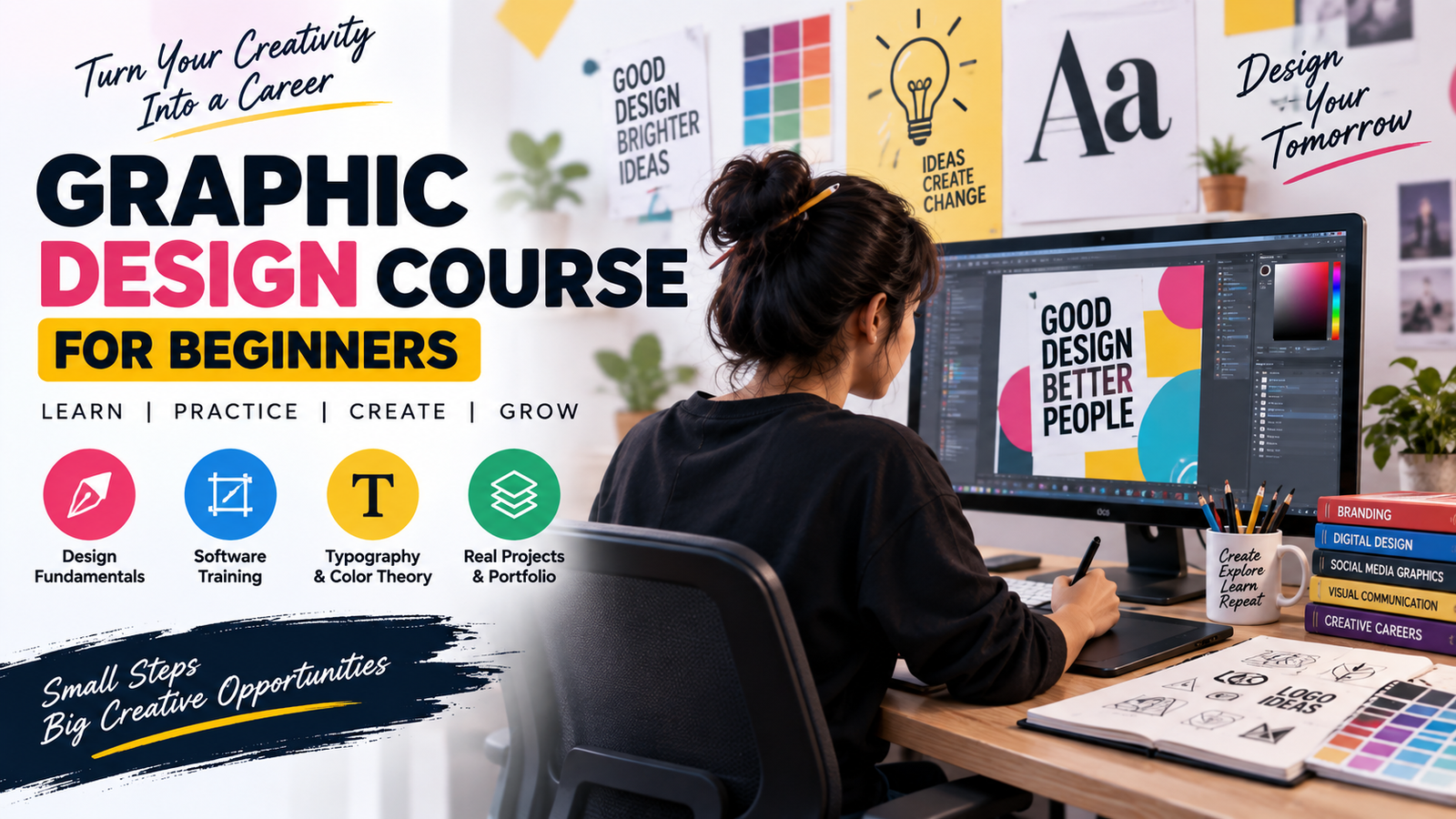
Have you ever looked at a poster, social media post, logo, website banner, or advertisement and wondered how it was designed? Graphic design is the creative process behind many of the visuals people interact with every day. It combines typography, colors, images, layouts, shapes, branding, and visual communication to deliver ideas in an attractive and meaningful way.
For anyone who wants to enter the creative industry without prior professional design experience, a Graphic Design Course for Beginners can provide a structured starting point. Instead of trying to learn everything independently, beginners can develop their design knowledge step by step, practice with professional tools, and understand how creative concepts are transformed into finished designs.
Digiquest Academy offers an environment for aspiring designers to develop practical digital and creative skills. With guided learning and project-oriented practice, students can work toward building a strong foundation in graphic design and creating work that reflects their individual creativity.
Is Graphic Design a Good Skill to Learn Today?
Visual communication has become an essential part of modern business and digital communication. Companies need designs for websites, advertisements, product packaging, social media, presentations, brochures, marketing campaigns, and brand identities.
This means graphic design is no longer limited to traditional advertising agencies. Designers can find opportunities across technology, e-commerce, education, media, entertainment, publishing, digital marketing, fashion, hospitality, and many other industries.
A Graphic Design Course for Beginners can help students understand how professional designs are created and why certain visual decisions work better than others.
The goal is not simply to make something attractive. Effective graphic design communicates a message clearly and creates a visual connection with its intended audience.
Graphic Design Course for Beginners: Where Should You Start?
Beginners often feel overwhelmed because graphic design includes many different areas. There are numerous software applications, design styles, terminology, techniques, and creative disciplines to explore.
A structured Graphic Design Course for Beginners can make the learning journey more manageable by introducing important concepts in a logical order.
Students can begin with the fundamentals before progressing toward more advanced design projects. This allows them to understand the reasoning behind their creative decisions instead of simply copying existing designs.
The learning journey can include:
- Design fundamentals
- Typography
- Color theory
- Composition
- Image editing
- Digital illustration
- Branding
- Logo design
- Print design
- Social media graphics
- Advertising creatives
- Portfolio development
What Does a Graphic Designer Actually Do?
A graphic designer creates visual solutions to communicate information, ideas, or brand messages.
Depending on their role, designers may create:
Brand identities: Logos, color palettes, typography systems, and visual guidelines.
Marketing materials: Posters, flyers, brochures, advertisements, and promotional graphics.
Digital content: Social media posts, website banners, thumbnails, email graphics, and online advertisements.
Editorial designs: Magazine layouts, publications, reports, catalogs, and other documents.
Packaging: Visual designs used for product boxes, labels, containers, and promotional packaging.
Presentation graphics: Professional slides and visual materials used to communicate business or educational information.
A good Graphic Design Course for Beginners helps learners understand these different applications and gives them opportunities to experiment with multiple design formats.
Graphic Design Course for Beginners: Learn the Fundamentals First
Before learning advanced software techniques, students need to understand the principles that make a design effective.
Typography
Typography is the art of selecting and arranging type. Font selection, hierarchy, spacing, alignment, and readability can significantly influence how a design feels.
Students learn how different typefaces communicate different personalities and how typography can be combined with images and other visual elements.
Color Theory
Color can influence attention, emotion, readability, and brand recognition. Designers need to understand color relationships, contrast, harmony, palettes, and appropriate color combinations.
Composition
Composition refers to how visual elements are arranged within a design. Balance, alignment, proximity, hierarchy, white space, and visual flow help guide the viewer’s attention.
Visual Hierarchy
A successful design should make it clear what the viewer needs to notice first, second, and third. Designers use size, position, contrast, color, typography, and spacing to establish hierarchy.
Design Consistency
Professional design requires consistency. Repeated colors, typography, spacing, imagery, and visual styles help create a recognizable identity.
These fundamentals form the foundation of an effective Graphic Design Course for Beginners.
Which Software Can Beginners Learn?
Modern graphic designers use digital tools to create, edit, organize, and present visual content.
Depending on the curriculum, a Graphic Design Course for Beginners may introduce students to software used for:
- Vector-based design
- Image editing
- Digital illustration
- Page layout
- Photo manipulation
- Branding
- Social media design
- Presentation graphics
Learning software is important, but understanding design principles is equally essential. A designer who understands composition and communication can adapt to new tools more easily.
At Digiquest Academy, students can develop their understanding of digital design while practicing how professional tools are applied to creative projects.
From Simple Designs to Professional Projects
One of the best ways to learn graphic design is by creating.
A beginner might initially create a simple poster. With practice, that same learner can progress to developing a complete brand identity, advertising campaign, social media collection, or marketing presentation.
A project-based Graphic Design Course for Beginners can encourage this progression by giving learners opportunities to apply each new concept.
For example, a learning pathway could move from:
Basic layout → typography exercise → color project → poster design → logo concept → branding project → advertising campaign → portfolio project
This gradual approach helps students understand how individual skills connect to larger creative assignments.
Graphic Design Course for Beginners for Students and Career Changers
Graphic design can appeal to people from many backgrounds.
Students may choose design because they want a creative career. Working professionals may want to add design skills to their existing role. Entrepreneurs may want to understand how to create better marketing materials. Content creators may want to improve their visual communication.
A Graphic Design Course for Beginners can therefore be useful for:
- College students
- School graduates
- Aspiring designers
- Content creators
- Entrepreneurs
- Digital marketers
- Social media managers
- Photographers
- Freelancers
- Career changers
- Small-business owners
- Creative enthusiasts
No matter where someone begins, consistent practice can make a significant difference.
Why Portfolio Building Matters
A certificate can demonstrate that you completed a course, but a portfolio demonstrates what you can actually create.
This is why portfolio development should be an important part of a Graphic Design Course for Beginners.
A beginner’s portfolio can include a variety of projects such as:
- Logo concepts
- Posters
- Social media creatives
- Business cards
- Brochures
- Advertisements
- Brand identity concepts
- Website banners
- Packaging concepts
- Editorial layouts
The portfolio should demonstrate different skills while maintaining a clear sense of personal creativity.
As students gain experience, they can replace early exercises with stronger projects and gradually build a professional body of work.
Career Paths After Learning Graphic Design
Graphic design skills can lead to several career directions. Depending on individual interests and abilities, learners can explore roles such as:
Graphic Designer
Creates visual content for brands, businesses, marketing campaigns, publications, and digital platforms.
Brand Identity Designer
Focuses on creating visual identities that help businesses communicate their personality and values.
Social Media Designer
Creates engaging graphics specifically for social platforms and digital marketing campaigns.
Advertising Designer
Develops visual concepts for advertisements, promotional campaigns, and marketing communications.
Layout Designer
Works on magazines, brochures, catalogs, reports, presentations, and other structured publications.
Digital Designer
Creates graphics for websites, apps, online campaigns, and other digital experiences.
Freelance Graphic Designer
Works independently with multiple clients and projects across different industries.
A Graphic Design Course for Beginners can provide the foundation needed to explore these career paths.
Why Choose Digiquest Academy?
Choosing an institute is an important part of starting a design journey. Beginners should look for a learning environment where they can ask questions, experiment, receive feedback, and practice regularly.
Digiquest Academy focuses on creative and digital skill development, helping students build practical knowledge that can be applied to real design projects.
For learners searching for a Graphic Design Course for Beginners, the academy can offer a structured pathway to understand design fundamentals, explore digital tools, practice creative techniques, and develop portfolio-ready work.
The emphasis on practical learning can help students move from simply understanding design concepts to actually applying them.
What Makes a Successful Graphic Designer?
Software knowledge is only one part of becoming a successful designer.
Creative professionals also need:
Curiosity: Great designers continue exploring new ideas and visual styles.
Observation: Studying existing designs helps learners understand why certain visual choices work.
Communication: Designers need to understand what clients and audiences are trying to communicate.
Problem-solving: Design is often about finding a visual solution to a specific communication challenge.
Attention to detail: Small differences in spacing, alignment, typography, and image quality can affect the final result.
Practice: Consistent practice is essential for improving design skills.
A Graphic Design Course for Beginners can provide the initial structure, but long-term growth comes from continuous experimentation and learning.
Turn Creativity into a Practical Skill
Graphic design offers an opportunity to combine creativity with practical digital skills. Whether your goal is to work for a design studio, join a marketing team, become a freelancer, create content, or develop your own business materials, learning design can provide valuable capabilities.
A Graphic Design Course for Beginners at Digiquest Academy can be a starting point for individuals who want to understand the fundamentals and develop their creative potential.
You do not need to know everything before you begin. Start with the basics, practice regularly, learn from feedback, create projects, and gradually develop your own design style.
Your first design may be a simple exercise. Your next project could become part of a professional portfolio.
Frequently Asked Questions About Graphic Design
What is a Graphic Design Course for Beginners?
A Graphic Design Course for Beginners is a structured learning program designed for people with little or no professional design experience. It typically introduces design fundamentals, typography, color theory, composition, digital tools, branding, and practical projects.
Can someone with no design experience join a graphic design course?
Yes. A beginner-focused course is designed to introduce concepts progressively. Students can start with fundamental principles and gradually develop more advanced skills through practice.
What will I learn in a Graphic Design Course for Beginners?
Students can learn design principles, typography, color theory, composition, image editing, digital design, branding, logo concepts, advertising graphics, social media design, and portfolio development, depending on the curriculum.
Do I need to know drawing before learning graphic design?
No. Drawing skills can be helpful for certain design areas, but they are not a requirement for becoming a graphic designer. Many graphic design tasks focus on layout, typography, imagery, branding, and visual communication.
Is graphic design a good career choice?
Graphic design can be a valuable career option for people who enjoy creativity, visual communication, and digital technology. Designers can work across marketing, advertising, media, publishing, technology, e-commerce, entertainment, and other sectors.
Can I become a freelancer after completing a Graphic Design Course for Beginners?
Yes. After developing sufficient skills and a strong portfolio, designers can explore freelance opportunities. Building client communication skills and consistently producing high-quality work can help freelancers develop their careers.
How important is a portfolio for a graphic designer?
A portfolio is highly important because it gives potential employers and clients a practical view of your abilities. Projects created during a Graphic Design Course for Beginners can be developed into portfolio pieces.
Which software should a beginner learn?
The appropriate software depends on the type of design work you want to pursue. Beginners can explore tools for vector graphics, image editing, page layout, illustration, and digital design as part of their training.
How long does it take to learn graphic design?
The learning period varies according to the course structure, individual practice, previous experience, and career goals. Basic design principles can be learned relatively quickly, while professional-level expertise develops through continued practice and real-world projects.
Why choose Digiquest Academy for graphic design training?
Digiquest Academy provides creative and digital-focused education for learners who want to develop practical skills. Students looking for a Graphic Design Course for Beginners can explore the academy’s curriculum, learning methodology, projects, and career-focused approach before choosing the program that suits their goals.
Begin Your Design Journey with Digiquest Academy
Great design starts with an idea, but turning that idea into an effective visual requires knowledge, practice, and creativity.
If you are ready to explore typography, colors, layouts, branding, digital graphics, and visual communication, a Graphic Design Course for Beginners can give you the foundation to start.
With structured learning and practical project experience, Digiquest Academy can help aspiring designers take their first steps toward a creative digital career.
Learn the fundamentals. Practice your ideas. Build your portfolio. Create your future with graphic design.